How to Play Mahjong: A Beginner’s Guide to the Rules
Play the games from this guide

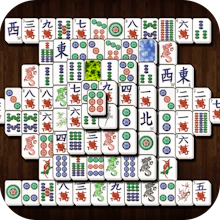
Mahjong looks complicated the first time you see 144 colorful tiles on a table. The good news: the basic idea is simple, and you can learn it in one evening. This guide explains what mahjong is, what the tiles mean, the rules of the classic four-player game, and how mahjong solitaire works, so you can start playing today.
What Is Mahjong?
Mahjong (also written mah jong or mahjongg) is a tile game that began in China in the 1800s. It is usually played by four people around a square table. Each player draws and discards tiles, trying to build a winning hand. If you know the card game rummy, you already understand the core idea: collect sets and get rid of what you don’t need.
Today mahjong is played all over the world, with many local rule sets: Chinese, Hong Kong, Japanese (riichi) and American mahjong are the best known. This guide teaches simple Chinese-style rules, which are the easiest place to start.
The Mahjong Tiles
A standard Chinese set has 144 tiles. There are four copies of most tiles.
| Group | Tiles | How many |
|---|---|---|
| Dots (circles) | Numbered 1 to 9 | 36 |
| Bamboo (sticks) | Numbered 1 to 9 (the 1 is often a bird) | 36 |
| Characters | Numbered 1 to 9 in Chinese characters | 36 |
| Winds | East, South, West, North | 16 |
| Dragons | Red, Green, White | 12 |
| Flowers and Seasons | Bonus tiles, one of each | 8 |
The three suits (Dots, Bamboo, Characters) are called suit tiles. Winds and Dragons are honor tiles. Flowers and Seasons are bonus tiles: they are set aside when drawn and add points, but they are not part of your hand.
The Goal: Four Sets and a Pair
A winning hand has 14 tiles, made of four sets and one pair. A set can be:
- Chow: three tiles in a row of the same suit, like 4-5-6 of Bamboo.
- Pung: three identical tiles, like three Red Dragons.
- Kong: four identical tiles (it counts as one set, and you draw an extra tile).
The pair, called the “eyes”, is two identical tiles. When you complete your hand, you call “Mahjong!” and show your tiles.
Setting Up the Game
- Turn all tiles face down and shuffle them on the table.
- Each player builds a wall 18 tiles long and 2 tiles high in front of them. The four walls form a square.
- The dealer (East) rolls the dice to choose where to break the wall.
- Players take tiles in turn until everyone has 13 tiles. The dealer takes a 14th tile.
- Anyone holding a Flower or Season puts it face up and draws a replacement tile.
How a Turn Works
Play moves counter-clockwise. The dealer starts by discarding one tile face up in the middle. After that, each turn is simple:
- Draw one tile from the wall (or take the last discard if you can use it, see below).
- Decide which tile you need least.
- Discard it face up and say its name.
The hand ends when someone calls Mahjong, or in a draw if the wall runs out first.
Chow, Pung and Kong: Taking a Discard
The exciting part of mahjong is grabbing other players’ discards to finish your sets.
- Chow: you can only take a discard for a run from the player just before you.
- Pung or kong: you can take a discard from any player to make three or four of a kind, even out of turn.
- Mahjong: any discard that completes your winning hand can be taken. This beats every other claim.
When you claim a discard, you place that set face up in front of you. Sets you build from tiles you drew yourself stay hidden, and hidden sets often score more.
Scoring (Keep It Simple at First)
Scoring is where rule sets differ the most. Many families play for fun without points at first, and that is a great way to learn. When you are ready, a simple system is: one point for a win, plus bonus points for a hand with no chows, a hand made from one suit, or sets of Dragons and your own seat Wind.
What About American Mahjong?
American mahjong, popular in the United States, uses 152 tiles including eight jokers. Before play, players pass tiles to each other in a ritual called the Charleston. Instead of free-form sets, you must build one of the hands printed on a card that the National Mah Jongg League releases every year. The tiles look familiar, but the strategy is quite different.
Mahjong Solitaire: Play Alone Any Time
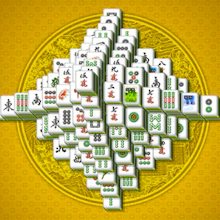
Mahjong solitaire is a completely different game that uses the same tiles. It is the version most people play on computers and phones. The tiles are stacked in a layout, and you remove matching pairs of free tiles until the board is empty. A tile is free when nothing is on top of it and its left or right side is open.
It’s a relaxing puzzle and a brilliant way to learn the tiles before you sit down at a real table. Start with Mahjong Master 2 (it has hints) or the elegant Traditional Mahjong. When you want something faster, try Mahjong Connect. You will find dozens more on our free mahjong games page.
Mahjong Tips for Beginners
- Pick a simple goal. Aim for any four sets and a pair before you chase high-scoring hands.
- Keep pairs early. Pairs can become pungs, and you need one pair to win.
- Drop lonely honors first. A single Wind or Dragon is hard to use, so discard it early.
- Watch the discards. If three of a tile are already discarded, don’t wait for the fourth.
- Don’t feed the next player. Notice what the player after you collects and avoid discarding it.
- Practice tile recognition. A few rounds of mahjong solitaire make the tiles feel familiar fast.
Mahjong FAQ
What is mahjong?
Mahjong is a tile game that started in China in the 1800s. It is usually played by four people with 144 tiles. Players draw and discard tiles to build a winning hand of sets, a bit like the card game rummy.
How many tiles are in a mahjong set?
A standard Chinese set has 144 tiles: 108 suit tiles (Dots, Bamboo and Characters), 28 honor tiles (Winds and Dragons) and 8 bonus tiles (Flowers and Seasons). American sets add jokers.
Can you play mahjong with 2 or 3 players?
Yes. Four players is the classic game, but there are popular three-player rules and simple two-player versions. Mahjong solitaire is for one player.
Is mahjong solitaire the same as mahjong?
No. Mahjong solitaire uses the same tiles but is a one-player matching puzzle: you remove pairs of free tiles until the board is empty. It is a great way to learn the tiles.
Is mahjong hard to learn?
The basic idea is easy: collect sets of three and one pair. Scoring and house rules take longer to learn, so most beginners start with simple rules and add scoring later.